Recent Posts by admin

Ollin

Proyecto Ollin is a grant funded initiative through USCIS, that allows Amistades and the Tucson Hispanic Chamber of Commerce to help our community members who haven’t become citizens yet, but can. As part of this USCIS-sponsored project, we partner with local businesses to encourage legal permanent residents (LPRs) in the workforce to take the next step and become U.S. citizens. 

Fact #11

Amistades uses a culturally rooted intergenerational family approach to working with Latinos. We prioritize addressing immediate issues, lead efforts that eliminate false narratives about Latinos, and develop system focused strategies that change the conditions that perpetuate inequities....
Read more

Segundo de Febrero

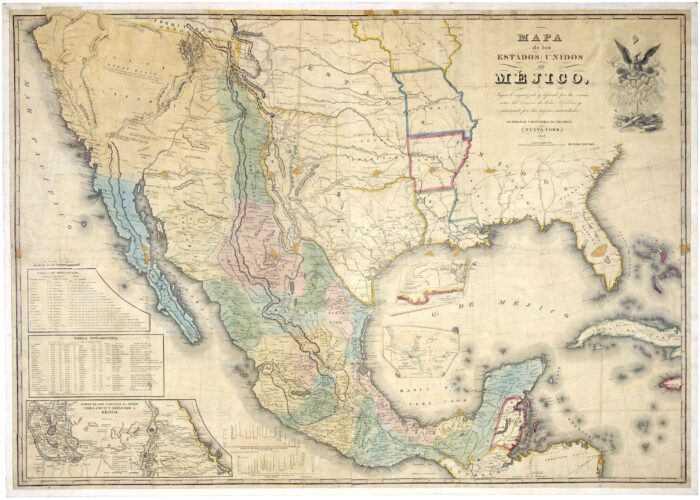
Amistades commemorates Segundo de Febrero, February 2, 1848, the day the Treaty of Guadalupe Hidalgo was signed and consequently ended the Mexican American War. Segundo de Febrero is a celebration of Mexican American history and culture by individuals and communities nationwide. Amistades, Inc. joins national efforts in California, New Mexico, Arizona, and its place of origin, Texas, to highlight political history and adopt it as a community-wide education and prevention effort. Segundo de Febrero is an opportunity for all community leaders from Tucson and across the state of Arizona to increase awareness about the consequences of substance abuse among youth and families. At the heart of the Segundo de Febrero concept and commemorative activities, is the need to continue to recognize Mexican American contributions to American society. Of utmost importance is to preserve Mexican American history, and pass the torch to a new generation of leaders. Amistades made history in 2011 when it hosted the original Treaty of Guadalupe Hidalgo for the 1st time in Arizona. The Treaty (housed at the National Archives in Washington, DC) was in Tucson for 30 days for public exhibition and educational purposes. Approximately 3,000 participants comprised of K-12 students, college students, community leaders, educators, and families visited the exhibit and gained knowledge of the peace treaty.

Amistades hosted the original Treaty of Guadalupe Hidalgo for the 1st time in Arizona. The Treaty (housed at the National Archives in Washington, DC) was in Tucson for 30 days for public exhibition and educational purposes. Approximately 3,000 individuals participated in a once-in-a-lifetime opportunity to gain knowledge of the peace treaty that not only ended the United States/Mexico War of 1846-1848, but also gave birth to the Mexican American community in this country. The geo-political boundary between Mexico and the United States as we know it today was established by the Treaty. Educational partners included Tucson Unified School District Mexican American Studies. K-12 students and teachers were able to benefit from enhanced curriculums and district wide activities built around the Mexico/US War, the Treaty of Guadalupe Hidalgo, and the day that has been selected to commemorate it, Segundo de Febrero (February 2).

This event made history as it was the 1st time this historical document was exhibited in Arizona. Financial support from individuals, groups, and businesses helped Amistades make history and “bring the Treaty of Guadalupe Hidalgo home.”

These podcasts were recorded at a symposium held in conjunction with the display of the original pages of the Treaty of Guadalupe Hidalgo at the Arizona State Museum during February 2011. The treaty pages were on loan from the National Archives. Arizona States Museum extends thanks to Amistades, Inc., the Vice President for Research at the University of Arizona, and the University's American Indian Studies department for support of the exhibition and the symposium. For more Arizona State Museum podcasts, go to www.statemuseum.arizona.edu/podcasts, or go to iTunes, keyword: Arizona State Museum.

Fact #10

Awarded 1 of 10 grants nationally by the American Medical Association Foundation Healthy Living grants....
Read more

Fact #9

1 of 80 sites selected nationally to host the CADCA VetCorps project serving military families and veterans....
Read more

Fact #8

1st ever 30 year digital archive of the Segundo de Febrero with Our Lady of the Lake University....
Read more

Fact #7

1st ever exhibit featuring the Treaty of Guadalupe Hidalgo on loan from the United States National Archives on Arizona....
Read more

Fact #6

Chosen by the UA Eller College of Management for fundraising and marketing partnership for development of best practices....
Read more

Fact #5

1 of 2 non profits in Arizona awarded continued funding by the Office of National Drug Control Policy Drug Free Communities Support Program....
Read more

Fact #4

Awarded 1 of 6 Office of National Drug Control Policy Drug Free Communities Mentoring Support Program grants nationally....
Read more

Recent Comments by admin

    No comments by admin yet.

My origin story and its alignment with the institutional origin story

I was four months old the first time my parents took me to the Pyramid of the Sun in Mexico. Four months old. My parents wanted their daughter, this tiny baby born to two activist parents, to be introduced early to something bigger than herself. They wanted me to know, before I could rationalize or understand it, that I came from somewhere important, and bigger than myself. That I belonged to a people who were smart and creative, who had built pyramids that still stood, who had built whole worlds. They wanted that to be my center, the core of my identity. When you know where you come from, you can move through the world as a more grounded, more secure, more whole person.

I’m saying that because I did not take a traditional path into this work and life of service. When I was younger, I left Arizona. I wasn’t in the nonprofit sector. I built a career nationally, transnationally, in the business sector. I traveled. I studied. I gathered tools and language and perspective from every room I could get myself into. For a long time, I was in the periphery, further away from the core of my identity. And I think some people wondered when, or if, I would ever come back.

But the center always pulled. My culture pulled. My family pulled. And in 2006, my father, Ricardo Jasso, founded Amistades. He was building a new center, with one program, in one neighborhood in Tucson, built on the idea that culture is a foundation for what a community can become. This center was strong, and it was a new pull back. Everything I had gathered in the periphery, every skill, every relationship, every perspective came home to strengthen it. So, that is where I come from.

And it is also the origin story of Amistades. Because Amistades was born the same way I was raised, with the understanding that world-making with a strong center is not something you do alone, and it is not something you do from a distance. You do it by knowing yourself, your values, and who you are, honoring the people who came before, and then reaching outward for everything you need to make the center stronger.

When people ask me why I am in this work, my answer is simple. Service. Service is the inheritance my parents gave me at the top of that pyramid. Coming from a sense of the deep appreciation for the gift of culture and community, and what it has given me, my service to our community is to empower others. Service is what my father modeled when he founded this organization. Service is what our team practices every single day in clinics, in classrooms, at kitchen tables and community centers across Southern Arizona.

How Amistades was centered, organized and where we are today

What we have built is not easy to describe in one sentence. I get asked all the time "So, what does Amistades do?" I always pause, because the simple answer would be to name a program, or to name a category. The real answer is more layered than that, and I have come to believe the complexity is the point.

Amistades does what our community asks us to do. That is the answer. That has always been the answer. And that is why we look the way we look today.

We started in 2006 with one program, in one neighborhood in Tucson, focused on youth substance use prevention. That was the need my father saw, and that was the door the community opened. So that is where we walked in. But when you actually listen to a community, the community keeps talking. They tell you what else is going on. They tell you that youth substance use is connected to family stress, and family stress is connected to economic insecurity, and economic insecurity is connected to health access, and health access is connected to immigration status, and, and, and. It’s all one lived experience. Our community has never had the luxury of siloing their lives, and so we have never had the luxury of siloing our work.

We grew because we kept listening. Every time community named a new need, we asked ourselves honestly: Are we the right people to hold this? Can we do it with excellence? Can we do it in a way that centers the voices of the people we serve? And when the answer was yes, we built the program. And when the answer was no, we helped find a partner who could. We didn’t chase grants. We didn’t follow trends – if we had, we’d probably have a lot more money!

Today, we work across Southern Arizona in public health, workforce development, civic engagement, higher education, behavioral health, community research, youth empowerment, and climate action. Each one of those areas is on our roster because a neighbor asked for it. Each one exists because we moved at the cadence of our community, not the cadence of the market.

That word, cadence, matters to me. Because I think one of the reasons Amistades has survived and grown for twenty years while other organizations have not is that we have refused to move faster than our community can move with us. We do not parachute in. We do not launch and leave. We show up, we stay, we build in partnership, and we grow only when the community grows with us. That is what centering looks like in practice. It is a discipline. It is a choice we make every single day.

So, when someone asks me what Amistades does, here is the real answer: we are a bridge. We sit between community and the institutions that want to reach community, like universities, funders, government agencies, healthcare systems, and private sector partners. We hold space for community voice. We convene the right people in the right rooms. We help external stakeholders understand Latino audiences with cultural depth, not cultural shorthand. And we do all of it while continuing to deliver direct programming in the neighborhoods that raised this organization.

We are, in many ways, doing the work of a research firm, a policy shop, a service provider, a convener, and a community anchor all at once. We aren’t trying to be everything, it’s just how things have evolved. Our community's needs are integrated, and we have chosen to honor that integration rather than fragment it for the convenience of institutions that would prefer a simpler story.

Where we are going, what is at stake and our next phase

I want to be honest about the moment we are in. The nonprofit sector is under a microscope. Funding is shifting. Political voices are loud. Public trust is being tested. Our community is feeling the weight of all of it. We are aware of this, and I don’t want to minimize how hard and stressful it is for everyone.

But we are not afraid. Because twenty years of roots have taught us something about how to hold steady when the wind picks up. For our 20th anniversary year, we are choosing to pause, reflect, and recalibrate. To know what we do best and do it with excellence. We are being deliberate about mission clarity, about protecting our team, about staying in relationship. We are, as we say internally, playing the long game.

Our current climate is pressuring all of us to play the short game. React. Chase. Scramble. Take whatever funding comes through the door. Say yes to every opportunity because you are afraid there will not be another one. I understand that pressure. Every nonprofit leader understands that pressure. But Amistades has been around for twenty years precisely because we have refused to play the short game with our community. And we are not going to start now, even if the climate around us can feel more difficult than it ever has.

The long game is different.

The long game is what we started in 2006 when we built one program in one neighborhood and trusted that if the work was rooted in culture and community, it would grow. The long game is what has gotten us to twenty years. And the long game is what will get us to forty, to sixty, and beyond.

What does the long game look like for us? It looks like maintaining true, deep partnerships, with friends and colleagues who believe that our community matters to the American tapestry. It looks like protecting ourselves, especially our team, when the work is extra hard. It looks like doing the best work we can, to honor and protect the trust our community has placed in us. It looks like continuing to be the bridge between community and institution, because that bridge is more needed now than it has ever been, and many of our community members are, quite frankly, afraid to speak up right now, afraid of institutionality.

I’m excited that it also looks like something new: connection across regions.

We grow where purpose calls.

One of the most striking things I have seen in the last few years is how many organizations, funders, universities, and institutions from outside Arizona are reaching out to us. They want to work with Latino communities in the Southwest. They want cultural depth, community trust, and authentic reach. They are coming to Amistades because they know we can be that bridge, and we have entered into interesting and genuine partnership.

At the same time, we are also reaching out. We have things to learn from partners in California, in Texas, in New Mexico, and across the country. Our communities are connected. Our issues are connected. Our futures are connected. And in a moment when so much of the national conversation is trying to fragment us, we are choosing to deepen our roots with partners across the Southwest, and beyond.

Purpose is calling us to be in conversation and partnership with communities who are asking us to walk with them. That is a call we intend to answer, now and in the future.

No one builds what our communities deserve along. Not any organization. The next chapter is going to require all of us being in the same rooms, in conversation and partnership, making decisions shaped by the people those decisions affect.

We have planted the seeds. We have grown the roots. Now we are growing up and out and asking you to grow along with us and show the beauty of what can come out of the desert.